In the serene world of mindfulness and meditation, few tools are as iconic or as deeply rooted in tradition as the 108 bead mala. Whether you are a seasoned yogi or someone just beginning to explore the depths of inner peace, you have likely encountered these beautiful strands of beads. But have you ever stopped to wonder why there are exactly 108 beads? The number is not arbitrary; it is a sacred code woven into the fabric of Eastern philosophy, astronomy, and spiritual practice. Understanding the 108 bead mala meaning transforms a simple accessory into a profound instrument for transformation.
The Sacred Geometry of the Number 108
To truly appreciate the significance of 108 beads, we must look beyond the physical object and into the metaphysical beliefs that surround it. In many Eastern traditions, numbers are not just for counting; they represent cosmic order.
The Mathematical Harmony Ancient mathematicians and Vedic scholars viewed 108 as a number of wholeness. It connects the sun, the moon, and the earth. The average distance of the Sun from the Earth is roughly 108 times the Sun’s diameter. Similarly, the average distance of the Moon from the Earth is roughly 108 times the Moon’s diameter. This astronomical coincidence suggests that our planet exists in a delicate, harmonious balance with the cosmos. When you hold a mala necklace, you are literally holding a representation of this universal alignment.
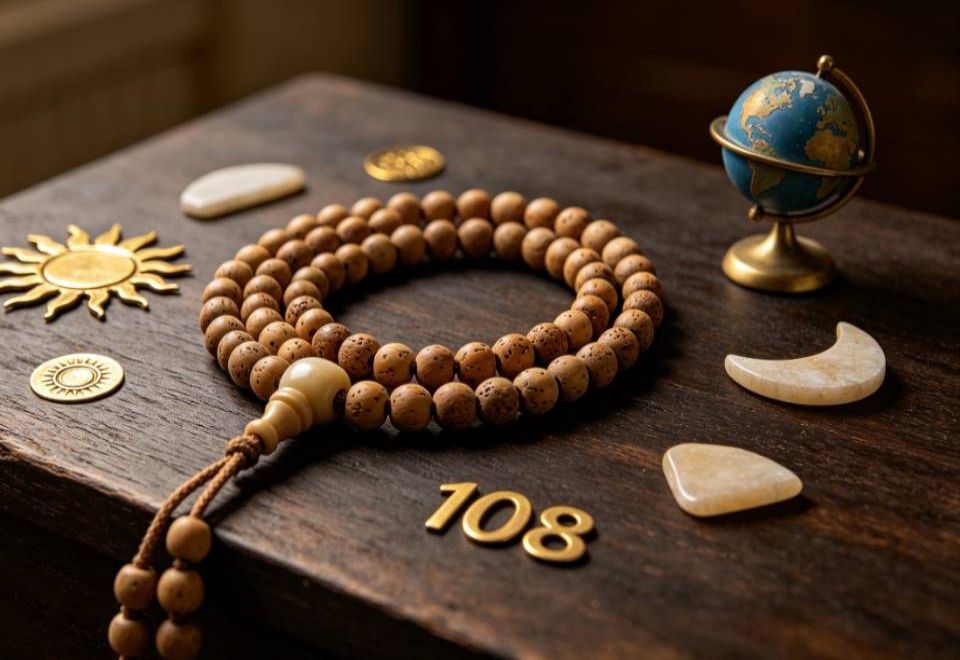
The Spiritual Anatomy
n the yogic tradition, the body is home to energy channels known as nadis. It is said that there are 72,000 nadis converging at the heart chakra. However, these complex pathways eventually distill down to 108 primary energy lines. These lines form the network through which prana (life force) flows. A blocked nadi results in stagnation, while a clear nadi allows for enlightenment. Using a 108 bead mala for mantra meditation is believed to help clear these pathways, untangling the knots of stress and ego that bind us.
Historical Roots: From Ancient India to Modern Practice
The history of the mala is as rich as its symbolism. While often associated with Buddhism today, the practice originated in ancient India within Hinduism (Sanatana Dharma) thousands of years ago.
The Vedic Connection
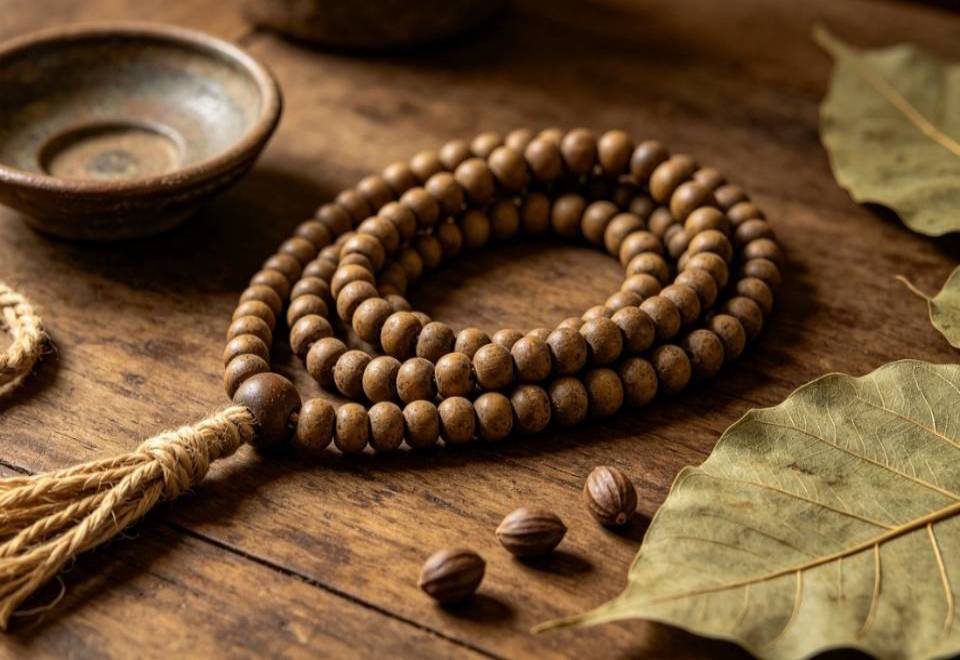
The earliest references to bead counting can be found in the Vedas, the oldest scriptures of Hinduism. Brahmins used knotted strings of grass or seeds to keep track of their recitations of mantras and hymns. Over centuries, these simple strings evolved into the sophisticated jewelry we see today. The materials changed—from rudraksha seeds to sandalwood, gemstones, and pearls—but the purpose remained the same: to anchor the mind.
Buddhism and the Spread of the Mala As Buddhism spread from India to Tibet, China, and Japan, it carried the mala tradition with it. In Tibetan Buddhism, the 108 bead mala meaning is tied to the removal of the 108 types of worldly desires or defilements that cause human suffering. By reciting a mantra 108 times, the practitioner symbolically purifies themselves of these negative karmic imprints. This cross-cultural journey explains why you will find slight variations in how different traditions use their beads, yet the core reverence for the number 108 remains constant.
Symbolism in Practice: More Than Just Counting
Why do we need beads at all? Why not just count in our heads? The answer lies in the nature of the human mind. The mind is often described as a “monkey mind,” jumping from thought to thought. The tactile sensation of the beads serves as a grounding mechanism.
The Guru Bead
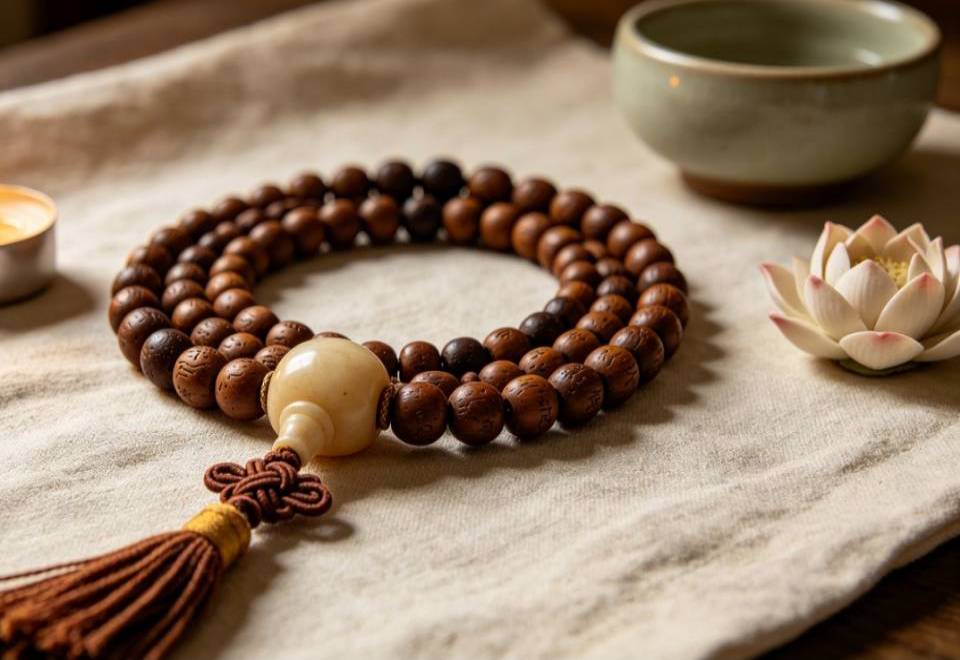
If you look closely at a traditional mala necklace, you will notice one bead that stands apart. This is the Guru bead (or Meru bead). It represents the teacher, the divine, or the state of enlightenment itself. In traditional practice, you never cross over the Guru bead. When your fingers reach it after completing a full circle of 108 repetitions, you pause, reflect on your intention, and turn the mala around to begin again. This act symbolizes humility and the understanding that the spiritual journey is cyclical and endless; there is always more to learn.
Mantra Meditation and Focus The primary use of the mala is for Japa meditation—the repetitive recitation of a sacred sound or phrase. Each bead marks one repetition. This rhythm induces a trance-like state, lowering brain wave activity and promoting deep relaxation. Whether you are chanting “Om Mani Padme Hum,” “So Hum,” or simply focusing on your breath, the 108 bead mala acts as a physical metronome for your soul. It keeps you present when your mind tries to wander to the past or future.
Choosing Your Mala: Materials Matter
While the number 108 provides the structure, the material of the beads adds another layer of symbolism.
Different stones and seeds carry unique vibrational frequencies that can support specific intentions.
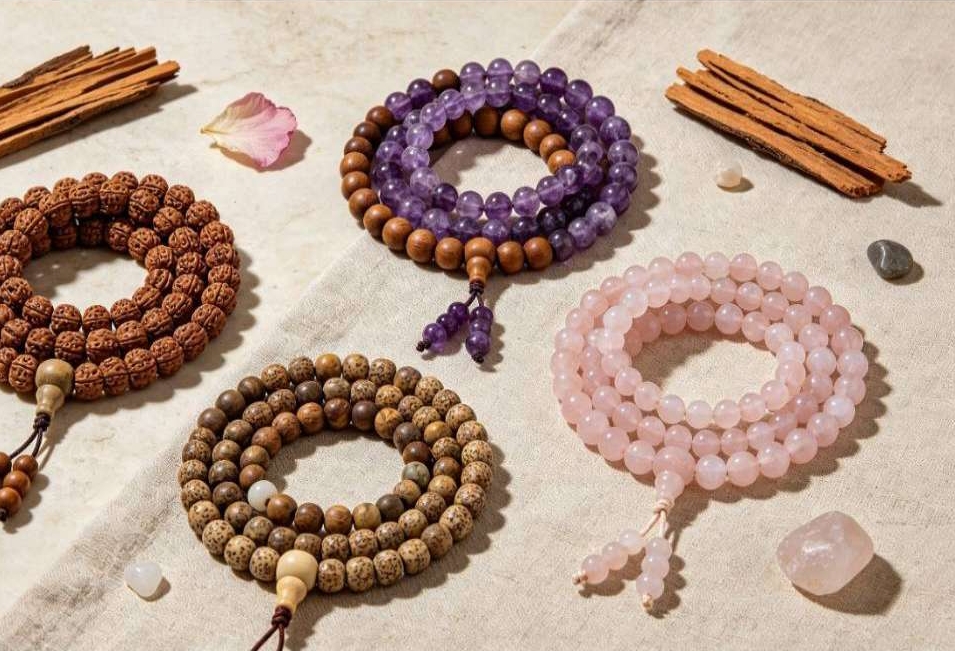
– Rudraksha: These textured seeds are associated with Lord Shiva and are considered powerful protectors. They are excellent for calming anxiety and stabilizing emotions.
– Sandalwood: Known for its soothing scent, sandalwood malas are traditionally used to cool the mind and aid in deep meditative states.
– Gemstones: Crystals like Amethyst (for intuition), Rose Quartz (for love), or Lapis Lazuli (for truth) allow you to customize your practice based on what you wish to cultivate in your life.
When selecting a 108 bead mala, trust your intuition. The right mala often feels like an extension of yourself, a companion that supports your personal growth.
Conclusion
The 108 bead mala meaning is a tapestry woven from astronomy, anatomy, history, and spirituality. It is a reminder that we are part of a larger universe, connected by invisible threads of energy.
Whether you wear it as a stylish piece of jewelry or use it strictly for meditation, the mala serves as a tangible anchor in an increasingly chaotic world. By honoring the tradition behind the beads, you invite a sense of discipline and sacredness into your daily routine. So, the next time you wrap a mala around your wrist or let it rest against your heart, remember the 108 steps it represents—a journey toward clarity, compassion, and ultimate peace.
TDK & Translation Title:
108 Bead Mala Meaning: History, Symbolism & Spiritual Significance Description: Discover the profound 108 bead mala meaning rooted in ancient history and astronomy. Learn why this sacred number matters in yoga and meditation, and how to choose the right mala for your spiritual journey. Keywords: 108 bead mala meaning, mala necklace, significance of 108 beads, mantra meditation, spiritual jewelry, yoga accessories, japa mala, history of mala beads.